
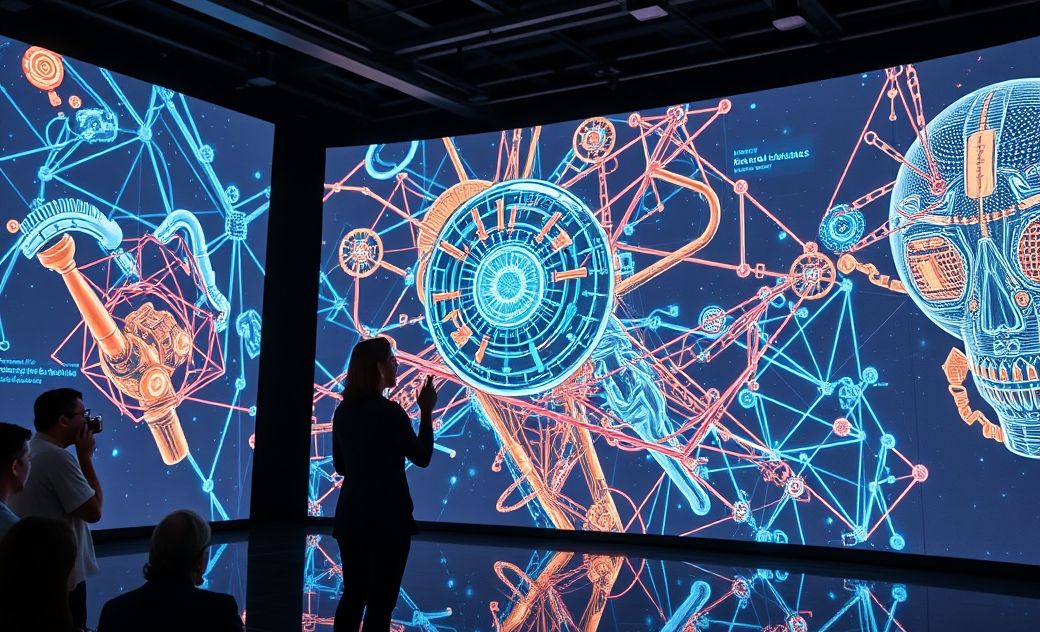
The advent of artificial intelligence (AI) has set off a revolution across numerous industries, and the creative sector is no exception. AI art, in particular, is swiftly gaining ground, establishing itself as a significant force. The rise of AI-generated art presents both challenges and opportunities, transforming how art is created, perceived, and valued around the world.
Understanding AI Art
AI art involves the use of machine learning algorithms to create artwork. These algorithms can analyze thousands of images to learn about styles, techniques, and patterns, subsequently creating unique pieces of art. Pioneers in AI technology, such as GANs (Generative Adversarial Networks), have enabled computers to mimic and generate artworks that can be mistaken for those made by humans.
The Technology Behind AI Art
AI art is largely powered by deep learning and neural networks. GANs, in particular, have been pivotal in creating visuals that are not only innovative but also artistically impressive. These networks consist of two elements: a generator and a discriminator, working in tandem to produce images that improve over iterations, gradually getting closer to a desired artistic style.
Impacts on the Creative Industry
The implications of AI in the creative industry are profound. From democratizing art creation to redefining artistic techniques, AI is reshaping the traditional art domain.
Democratization of Art Creation
AI art tools allow individuals without fine art skills to produce sophisticated artwork. This democratization opens the realm of art creation to wider audiences, enabling diverse participation and expression. Platforms offering AI art applications are increasingly accessible, empowering amateurs and professionals alike to embark on artistic exploration.
The Redefinition of Artistic Value
As AI art climbs the ranks of the art world, it prompts debates about authenticity and value. What makes a piece of art valuable when its creation involves an algorithm rather than a human touch? While traditionalists may argue that AI lacks the human element inherent in artistry, others appreciate the innovative blend of technology and creativity, viewing AI as a tool rather than a creator.
Expanding Market Possibilities
AI art also expands market possibilities. With AI-generated art entering auctions and galleries, the roots of a new art market are being established. Collectors and enthusiasts are drawn to the novelty and complexity behind AI-created pieces, enhancing their appeal and market value. Furthermore, NFTs (Non-Fungible Tokens) linked with AI art offer a unique integration with blockchain technology, propelling digital art into unprecedented visibility and value.
Challenges Facing AI Art
Despite its potential, AI art faces several challenges. Questions around copyright, ownership, and ethical considerations loom large as technology continues to evolve.
Issues of Copyright and Ownership
One significant issue is determining the ownership of AI-generated art. Since AI relies on pre-existing artworks to generate new pieces, the question of intellectual property rights becomes complex. Who owns the rights—the programmer, the user, or the AI itself? Legal frameworks are still catching up with these technological advancements, seeking to establish clear guidelines and protections.
Ethical Concerns and Authenticity
Ethical considerations also arise regarding the role of AI in art. Some argue that AI art lacks the authenticity and emotional depth traditionally associated with human-created works. Furthermore, as AI can replicate styles with uncanny accuracy, it blurs the lines between inspiration and imitation, raising concerns about the originality and authenticity of art produced using such technology.
The Future of AI Art
As AI continues to evolve, its role in transforming the creative industry will likely expand. Futurists and creatives are already predicting advanced AI systems that not only create but also inspire artists to push the boundaries of traditional techniques. For AI art to reach its full potential, navigating ethical challenges and developing robust frameworks for copyright and ownership will be crucial.
AI art promises to be a catalyst for innovation and evolution within the art world, inviting artists, technologists, and the public to engage with new creative possibilities. As we embrace this technological advancement, one truth remains: art, irrespective of its mode of creation, continues to be a profound form of expression and communication.
