
Introduction
Battery-powered electronics are part of everyday life, from portable medical devices and wireless sensors to smart home products, power tools, and consumer electronics. As these products become smaller and more advanced, engineers face a common challenge: delivering reliable performance while using less energy. Every part of a circuit matters, especially the semiconductor devices that control the flow of electrical current. This is where low voltage MOSFETs play an important role.
These components help manage power efficiently, reduce energy losses, and support longer battery life when selected and used correctly. Good-Ark offers low- and medium-voltage MOSFET solutions designed for engineers who need to compare electrical characteristics across different device options. Understanding how these components work, which specifications matter, and how to evaluate suitable devices can help designers make better decisions for modern battery-powered electronics.
Understanding Low Voltage MOSFETs in Battery-Powered Devices
A metal-oxide-semiconductor field-effect transistor, commonly known as a MOSFET, is a semiconductor device used to switch or control electrical current. Low voltage MOSFETs are designed for applications that operate at relatively low drain-source voltages. They are widely used in battery management systems, DC-DC converters, motor control circuits, load switching, and other electronic power applications. In these systems, a MOSFET can act as an electronic switch, allowing current to flow when needed and stopping it when the circuit requires a different operating state. Compared with some alternative switching methods, a properly selected MOSFET can offer fast switching and low conduction losses. These benefits are valuable in products where battery capacity, operating time, and thermal performance are important design goals.
The effectiveness of a low voltage MOSFET depends on more than its voltage rating alone. Engineers must also consider drain current, on-resistance, gate charge, switching behavior, and package design. These characteristics influence how the device performs under actual operating conditions. For example, a MOSFET with low on-resistance can reduce the heat produced while current passes through it, while suitable gate characteristics can help limit the energy required to switch the device. However, the best choice depends on the complete circuit, including its switching frequency, available gate-drive voltage, cooling capacity, and expected load. Good-Ark helps engineers begin this evaluation by providing a category of low- and medium-voltage MOSFET products with specifications that support an initial comparison of candidate components.
How Low Voltage MOSFETs Improve Battery Efficiency
Battery efficiency depends on how effectively an electronic device converts stored energy into useful work. Unnecessary electrical losses can shorten operating time, increase component temperature, and create additional cooling requirements. Low voltage MOSFETs help address these challenges by controlling current with relatively low resistance when fully switched on. This is especially useful in battery-powered systems that supply motors, processors, communication modules, displays, or other components with changing power demands. When a MOSFET is selected to match the load and operating conditions, it can help reduce power wasted as heat. Better power management may also support smaller circuit designs and improve overall product reliability, although the final results depend on the complete system rather than a single component.
On-resistance, usually written as RDS(on), is one of the most important specifications when evaluating conduction losses. In a simplified switching circuit, conduction power loss increases with the square of the current and the MOSFET’s on-resistance. This means that even a modest reduction in resistance can make a meaningful difference in high-current applications. Switching losses also matter, particularly in power converters that operate at high frequencies. Gate charge, switching speed, circuit layout, and the gate driver can all affect these losses. Engineers should therefore balance low on-resistance with other electrical characteristics instead of choosing a component based on one impressive specification. For battery-powered electronics, a balanced design can help improve energy use, manage heat, and maintain stable operation across expected load conditions.
Key Specifications for Selecting Good-Ark MOSFETs
The Good-Ark LV&MV MOSFET category provides a useful starting point for comparing low- and medium-voltage semiconductor devices. Its product table includes important parameters such as drain voltage, current, on-resistance, gate charge, and capacitance. Drain-source voltage, often identified as VDS, indicates the voltage the device is designed to withstand under specified conditions. Drain current provides information about its current-handling capability, but the practical limit depends on factors such as temperature, PCB copper area, package thermal resistance, and cooling. Engineers should review these specifications together to identify components that fit the electrical and thermal demands of their applications. They should also account for voltage transients and other conditions that may occur during startup, shutdown, or sudden changes in load.
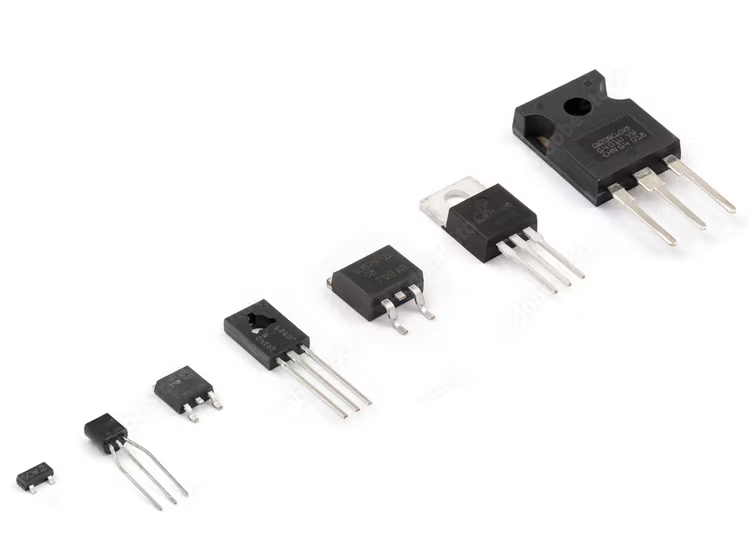
Gate charge and capacitance are equally important when switching performance matters. Gate charge affects how much charge the driver must move to turn the MOSFET on and off, while input and output capacitances influence switching transitions and circuit behavior. Different channel configurations, including N-channel and P-channel devices, provide options for different switching arrangements. Package type also influences PCB layout, heat dissipation, assembly requirements, and available space. The Good-Ark product table allows engineers to narrow their choices using these electrical characteristics before reviewing the detailed datasheet for each component. That second step is essential because specifications are measured under defined test conditions, and ratings may change with temperature, gate voltage, or other operating factors. A careful comparison helps prevent mismatches and supports a more reliable design process.
Applications of Low Voltage MOSFETs in Modern Electronics
Low voltage MOSFETs support many products that depend on efficient power conversion and electronic switching. In portable electronics, they can help control power delivery to individual circuit sections, reducing unnecessary energy use when selected for the required operating mode. In battery management systems, MOSFETs may be used to connect or disconnect battery paths as part of protection and control circuits. They are also common in DC-DC converters, where efficient switching helps convert one voltage level into another. In motor-driven products, such as cordless tools, small pumps, and fans, MOSFETs can control current to regulate motor operation. Each application presents different demands, so engineers must match the component’s electrical ratings, switching behavior, and thermal performance to the intended use.
Good-Ark’s low- and medium-voltage MOSFET range can help designers explore suitable semiconductor options for these applications. However, component selection should always begin with clear system requirements rather than a general preference for a particular device type. Engineers should identify the battery voltage range, peak and continuous current, switching frequency, available gate-drive voltage, and expected ambient temperature. They should also consider protection against overcurrent, overheating, and voltage spikes where appropriate. Prototype testing can then confirm whether the chosen MOSFET performs as expected under realistic operating conditions. By combining product-table comparisons with datasheet reviews and circuit testing, design teams can make more informed decisions and improve the balance between efficiency, reliability, size, and cost.
Conclusion
Low voltage MOSFETs are important building blocks for efficient battery-powered electronics because they enable controlled switching, help reduce conduction losses, and support compact power management designs. Their benefits depend on selecting the right combination of voltage rating, current capability, on-resistance, gate charge, capacitance, and package characteristics. The Good-Ark LV&MV MOSFET category offers a practical starting point for comparing these parameters and identifying devices for further evaluation. Engineers should always confirm the detailed datasheet ratings and test conditions before choosing a component for production use.
Beyond its semiconductor products, Good-Ark’s history reflects a commitment to development, learning, cooperation, and long-term growth. As the company continues its ambition to expand its global presence, its focus on customer appreciation and shared progress provides a meaningful foundation for serving the evolving electronics industry. By combining careful engineering with thoughtful component selection, designers can create battery-powered products that use energy more effectively and deliver dependable performance.
