
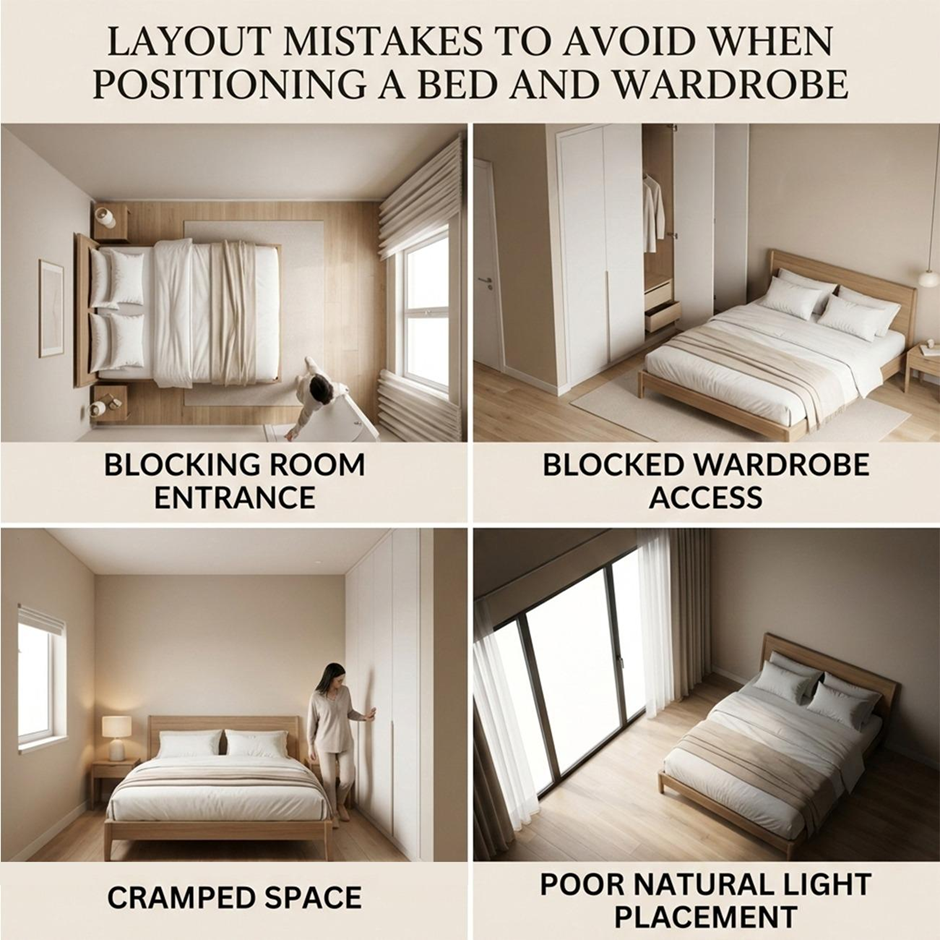
Introduction: Why Bedroom Layout Planning Matters
Let’s talk about something that almost every home goes through at some point. Rearranging the bedroom. You buy a new bed, maybe shift the cupboard to another wall, move the side table a little, and suddenly the room either starts feeling much better or somehow… worse. You know that feeling, right?
The truth is, bedroom layout matters a lot more than we usually think. A bedroom is not just about placing furniture wherever it fits. It is the space where we start the day and end the day. It should feel comfortable, easy to move around in, and visually balanced.
And when we talk about bedroom furniture, two pieces clearly dominate the room. The bed and the wardrobe. A king bed naturally becomes the centre of the room. And the wardrobe for clothes becomes the daily storage hub that we open multiple times a day. If these two are not positioned properly, the entire bedroom can start feeling cramped, awkward, or inconvenient.
Sometimes the room itself is not the problem. The layout is. A bed pushed too close to a wall. A wardrobe door that hits the bed every time it opens. A window getting blocked by a cupboard. These are small mistakes, but they slowly start bothering you every single day.
So let’s look at some of the most common layout mistakes people make when positioning a bed and wardrobe, and how avoiding them can instantly make the bedroom feel much more comfortable.
Ignoring Proper Space for Movement Around the Bed
One of the most common things people do while arranging furniture is this. They push the bed right against a wall to “save space”.
And at first it feels like a smart idea. But after a few days, the inconvenience starts showing up. When a king bed is placed too close to a wall or squeezed between furniture pieces, basic movement becomes difficult. One person has to climb over the other just to get out of bed. Changing bedsheets becomes an awkward exercise. Even cleaning the corners becomes frustrating. Bedrooms should always allow smooth movement around the bed. A comfortable layout usually keeps space on both sides of the bed and also at the foot area.
This helps in a few ways:
• Both sides of the bed remain easily accessible
• Side tables can be placed comfortably
• The room feels more open instead of tight
Even if the bedroom is not huge, leaving breathing space around the bed makes a noticeable difference. The room starts feeling calmer and more balanced. Many modern bedroom setups you see at places like Wooden Street follow this simple idea. The bed sits naturally in the room rather than being squeezed into a corner.
Placing the Wardrobe in Areas That Block Accessibility
Now let’s talk about wardrobes. Because wardrobe placement mistakes are surprisingly common.
Sometimes wardrobes get positioned wherever there is an empty wall. But that does not always work in real life. A wardrobe for clothes needs enough clearance for its doors and drawers to open properly. If the wardrobe is placed too close to the bed or another wall, the doors may not open fully. And that becomes a daily irritation.
Imagine trying to take out clothes while the door only opens halfway. Or drawers bumping into the bed frame. This is why wardrobe placement needs to be thought through carefully.
A few simple things help:
• Make sure wardrobe doors can open completely
• Leave enough space in front of the wardrobe for standing comfortably
• Avoid placing wardrobes where they block walking paths
Sliding door wardrobes solve some of these problems, but even then the front space should remain clear.
A well positioned wardrobe allows you to open doors easily, see everything inside, and move around without bumping into furniture.
And once again, when wardrobes are placed thoughtfully like you often see in bedroom layouts from Wooden Street, daily routines become much smoother.
Overcrowding the Bedroom with Large Furniture Pieces
Another mistake that quietly affects many bedrooms is furniture size. Sometimes people fall in love with a huge bed or a massive wardrobe without considering how it will fit inside the room.
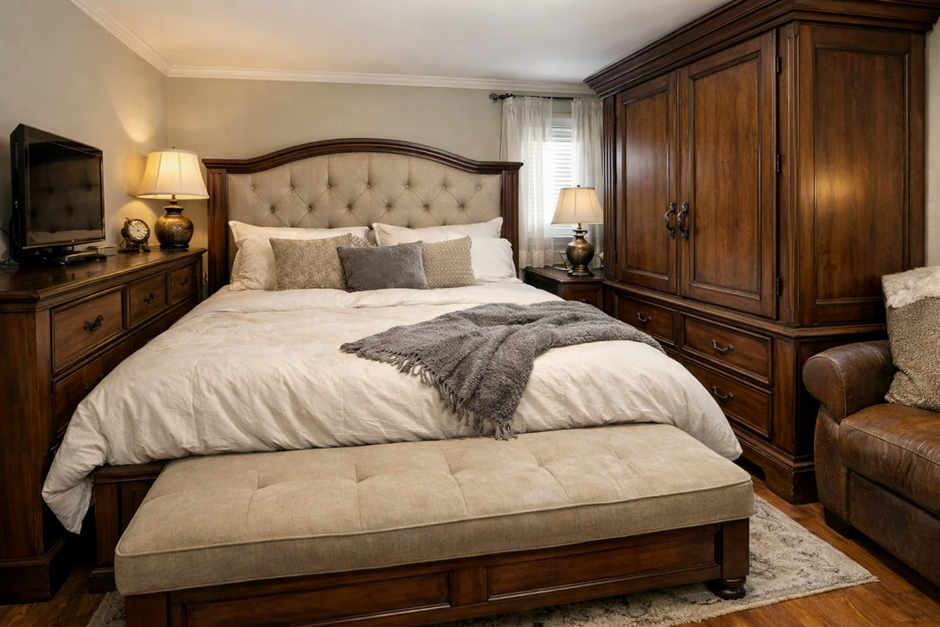
A king bed naturally occupies a good amount of floor space. If the wardrobe is also oversized, the room can start feeling overloaded. Instead of a relaxing bedroom, the space begins to feel strikingly jam-packed.
And that’s actually why proportion matters a lot. So the furniture should match-up with the size of the room rather than dominating it.
For example:
• In compact rooms, wardrobes with vertical storage really works very great
• Beds with built in storage can help you reduce the need for few extra cabinets
• Keeping a little empty space in room here and there helps the room breathe
When furniture sizes are balanced properly, the bedroom feels calm instead of crowded. And interestingly, the room may even look bigger without actually increasing its size.
Ignoring Natural Light and Room Flow
Natural light plays a big role in how a bedroom feels.
But sometimes furniture placement accidentally blocks the very thing that makes the room bright and comfortable. One common mistake is placing the wardrobe for clothes directly in front of a window or near a major light source.
The result? The room starts feeling darker even during the day.
Wardrobes are tall pieces of furniture. When they block windows or light pathways, the entire atmosphere of the room changes. Instead, wardrobes should ideally be placed along walls that do not interfere with sunlight entering the room.
The bed placement also matters here. Positioning the king bed where morning light softly reaches the room can make waking up feel much nicer.
Room flow is another important factor. The layout should allow you to move easily from the door to the bed and from the bed to the wardrobe without obstacles. When furniture placement supports natural light and movement, the bedroom instantly feels more pleasant.
Conclusion: Creating a Balanced and Functional Bedroom Layout
A comfortable bedroom is not only about stylish furniture. It is also about how that furniture is arranged.
The king bed and the wardrobe for clothes are the two pieces that define the entire bedroom layout. When they are positioned thoughtfully, the room becomes easier to use and much more relaxing.
· Avoid pushing the bed into tight corners.
· Allow wardrobe doors to open properly.
· Choose furniture sizes that suit the room.
· And make sure natural light continues flowing freely.
These small layout decisions may seem simple, but they influence everyday comfort more than we realize. Once the bed and wardrobe are positioned properly, the bedroom starts feeling more open, organized, and peaceful. And honestly, that is exactly how a bedroom should feel at the end of a long day.
